Prague Center for
Transatlantic Relations
(PCTR)
The Prague Center for Transatlantic Relations (PCTR) was established in November 2009 as an internal research, education and advisory facility of CEVRO Institute (now CEVRO University). You can follow us on Facebook and Twitter. You also have the possibility to watch the recordings of some of our public events on YouTube channel of CEVRO.
By joining NATO In 1999 the Czech Republic gained the best security guarantees in its modern history. It does not mean that we are to sit idlywith our hands folded in the lap and do nothing. Security should not be taken for granted. Its quality always depends on our will to do something for it and make sacrifices. This applies not only to us at home but also to our cooperation with the allies. The world is not a safe place; security threats of today are less predictable and therefore potentially more dangerous. A state which ignores security threats and loses the ability to defend itself is unlikely to have a long-term existence. Therefore, providing and maintaining security must remain an integral part of policy not only in the Czech Republic, but also in Europe.
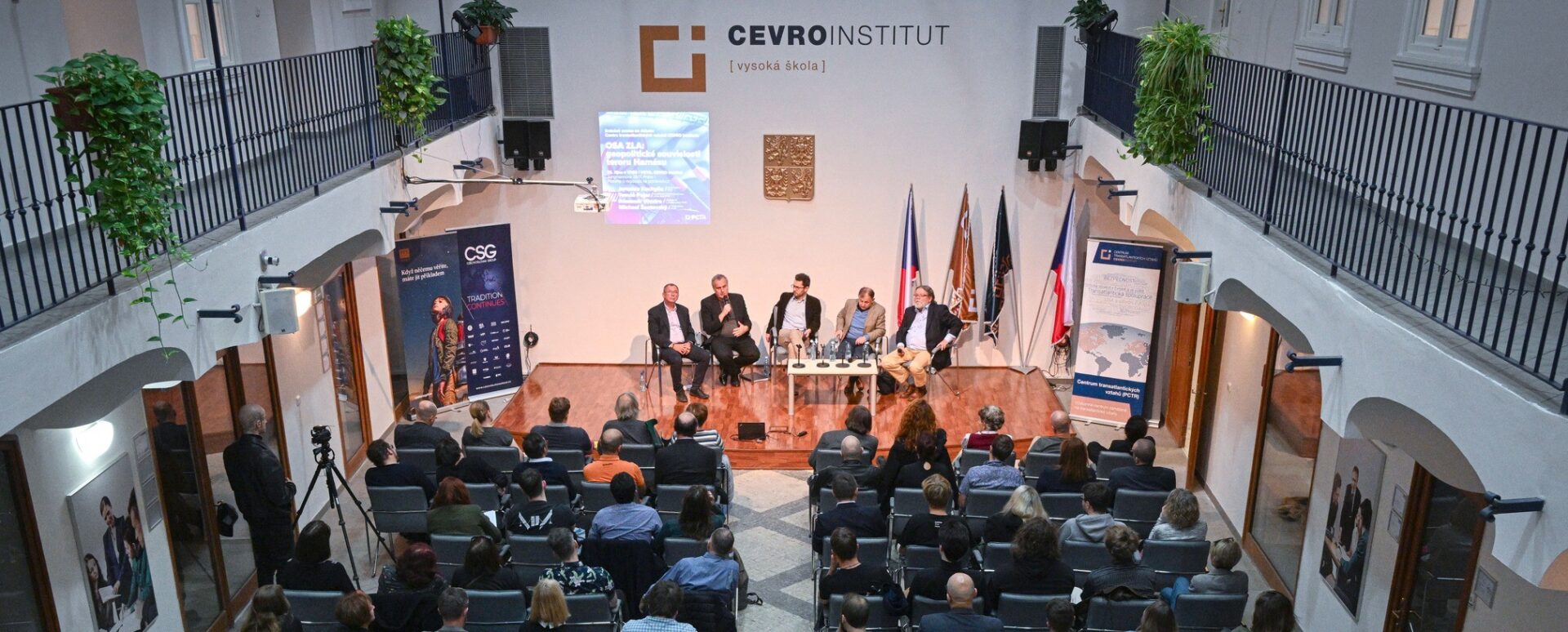
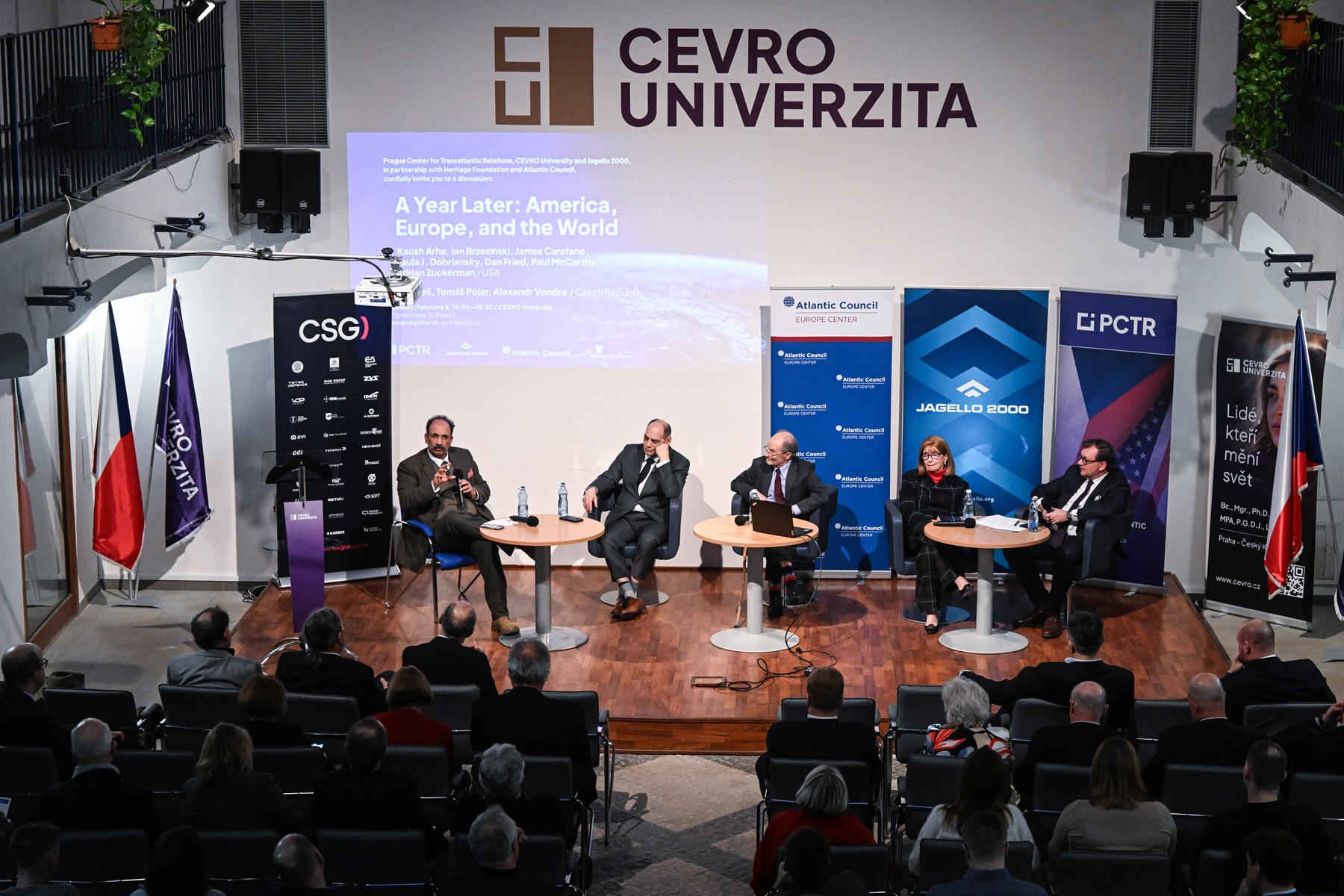
For this purpose the Prague Center for Transatlantic Relations at CEVRO University organizes conferences, seminars, workshops and produced analyses and policy recommendations for professionals. Our aim was to create a place in Prague where issues of foreign policy, security, and defense within the North Atlantic area would be addressed. The activities of the Prague Center for Transatlantic Relations help to strengthen and refine the Czech security and foreign policy community and to contribute to maintaining and strengthening the transatlantic alliance for the future.
Principles
- The preservation and the strengthening of the Transatlantic link represent a key contribution to Czech and European security.
- As the future of transatlantic relations is increasingly questioned, it is desirable that academic institutions in the new NATO member states devote a part of their research capacities to help solve the challenges facing the transatlantic agenda.
- Scepticism toward cooperation with the United States has been on the rise in the Czech Republic and some other Central European countries. It is important to prevent the recent difficulties in US–Central European relations from growing into a refusal of the very idea of transatlantic alliance.
- The concept of transatlantic relations should not be limited to NATO. In fact, transatlantic relations include a much wider range of issues spanning politics, security, economy and culture. In particular, US–EU relations are gaining special prominence.
Goals
- Conduct systematic research in the area of transatlantic relations with a special emphasis on US–Central European relations.
- Develop practical solutions to problems in transatlantic relations and produce analyses and policy recommendations that can be used in decision-making processes in the Czech Republic and in other countries of Central Europe.
- Join the Czech, European and US debates on the challenges that transatlantic cooperation faces.
- Spotlight issues and topics in transatlantic relations that have been neglected in the Czech and in the Central European foreign policy debates.
- Cooperate with European and US research institutions and thereby introduce Czech perspectives on transatlantic relations to a wider audience abroad.
Partners, Donors, Sponsors, and Supporters